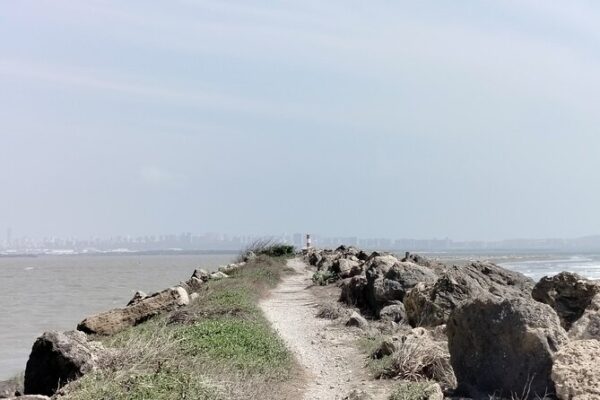

Barranquilla finally has its own beach destination — and you can get there by electric train. Puerto Mocho, located at the northern tip of the city where the Magdalena River meets the Caribbean Sea, opened to the public on November 30, 2024 after a major renovation. The result is a clean, organized public beach with modern facilities, a scenic trolley ride, and a laid-back coastal atmosphere that feels worlds away from the city center.
Whether you’re looking for a quick half-day escape, a family outing, or just want to feel sand between your toes without leaving Barranquilla, Puerto Mocho delivers. Here’s everything you need to know before you go.
The Train Ride: Getting to Puerto Mocho
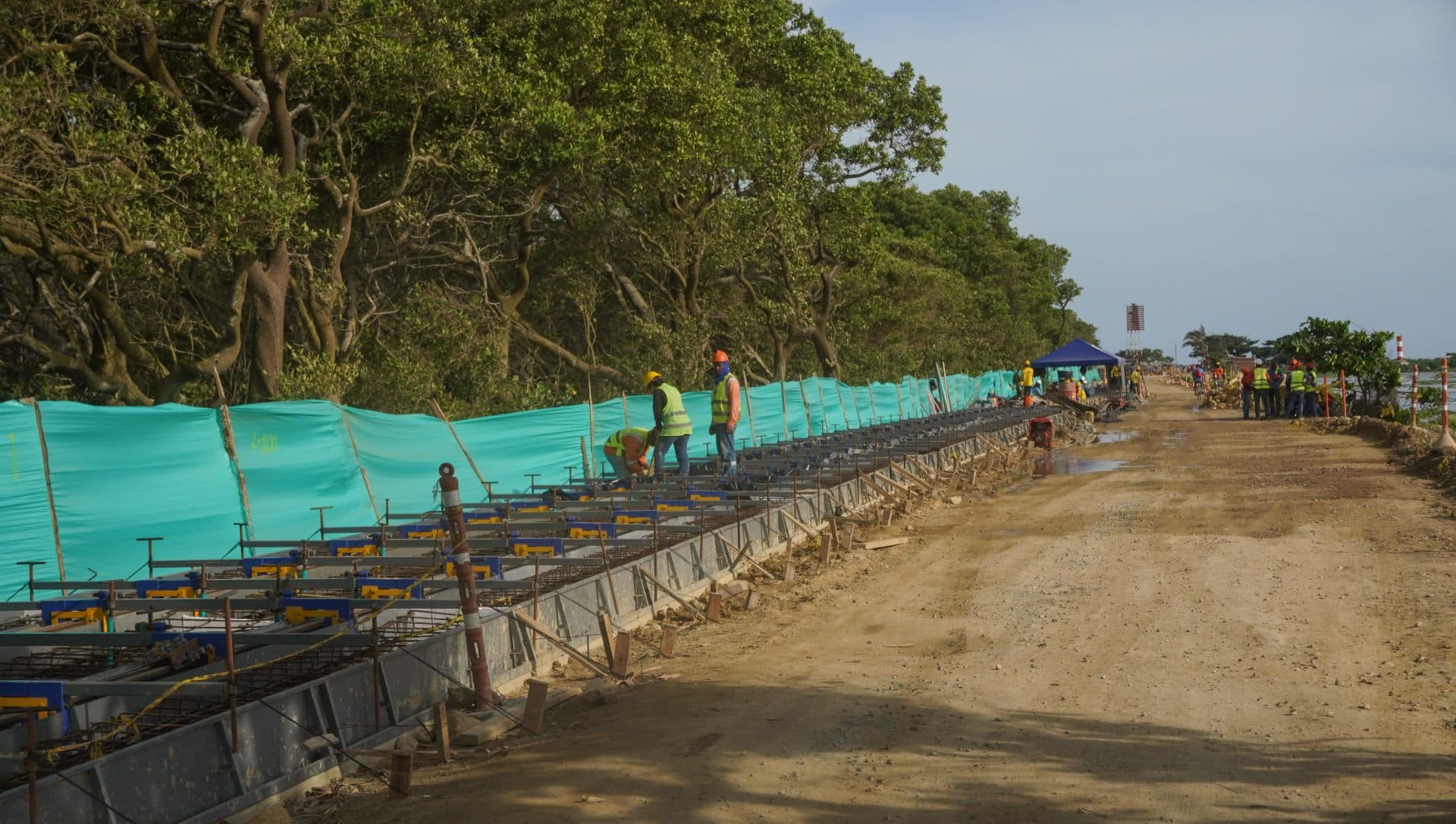
The star of the experience is the Tren Turístico de Las Flores — a 100% electric tourist train powered by Tesla batteries. Two wooden, open-air tram cars named Tajamar and Mar y Río (chosen by public vote) carry up to 70 passengers each along 2.67 kilometers of track on the western levee, from the Las Flores station to the beach.
The ride itself is part of the fun. The open sides let you take in views of the Magdalena River, the levee greenery, and the Caribbean horizon as you roll toward the coast. Trains depart every 30 minutes, and the journey takes about 15 minutes each way.
What You’ll Find at Puerto Mocho
When you step off the train, you’re greeted by a landscaped garden before the beach opens up ahead. The renovated Puerto Mocho stretches over one kilometer of coastline and is divided into three zones:
Sports zone — right along the waterline, for swimming, surfing, kite surfing, and paddleboarding. The water here is calm enough for families but also draws water sports enthusiasts.
Relaxation zone — shaded canopies and lounge chairs set up for people who’d rather sit back and enjoy the view. There are roughly 300 canopies with 650 chairs facing the sea, plus 144 picnic tables seating over 860 people.
Services zone — 18 kiosks and 16 kitchens where local vendors cook fresh seafood, fried fish, patacones, and cold drinks. These are the same families who’ve traditionally sold food at the beach for years, now with proper facilities.
There’s also a beach volleyball court and plenty of space for kids to run around.
Practical Info for Visitors
Location: Las Flores neighborhood, Riomar locality. Access via Calle 106.
Train fare: Around $10,000 COP round trip (about $2.50 USD). Tickets available at the station window or online through TuBoleta.com.
Parking: Available at the Las Flores station for approximately $16,000 COP.
Hours:
- Tuesday to Friday: 8:00 AM – 5:00 PM
- Saturday, Sunday & holidays: 6:00 AM – 5:00 PM
- Closed Mondays for maintenance
- Last train departs at 5:30 PM
Other ways to get there: Besides the train, you can also walk or cycle along the dedicated pedestrian path and bike lane that run parallel to the tracks. The path also accommodates skateboards, roller skates, and electric scooters.
Tips for Your Visit
Go early on weekends. Puerto Mocho drew over 5,000 visitors on its opening day, and weekends remain busy. Arriving when gates open gives you first pick of canopies and calmer conditions.
Bring sunscreen and cash. While the kiosks and some vendors may accept digital payments, cash is still king for most food and drink purchases at the beach. And there’s not much shade once you move past the canopy area.
Don’t skip the train. Even if you have a car, the trolley ride along the levee is genuinely enjoyable and part of the experience. Kids especially love it.
Combine it with other plans. Puerto Mocho pairs well with a morning at the Gran Malecón or an afternoon exploring the Las Flores neighborhood. The whole northern waterfront area is becoming Barranquilla’s go-to leisure corridor.
Why It Matters
For decades, Barranquilleros had to drive to Puerto Colombia, Salgar, or Santa Marta to reach a proper beach. Puerto Mocho changes that. It’s the city’s first and only urban public beach, and the electric train connection makes it accessible to everyone — not just those with cars. The project represents a broader shift in Barranquilla’s identity, from a purely commercial and industrial port city to one that embraces its Caribbean coastline.
The city expects Puerto Mocho to draw 250,000 additional visitors annually, and early signs suggest that estimate may be conservative. It’s already one of the most talked-about new attractions on Colombia’s Caribbean coast.